Grapes and raisins can cause acute kidney failure in dogs, and there is no known safe amount - some dogs are fine after several, others develop kidney failure from one or two. Sultanas and currants carry the same risk. If your dog has eaten any, contact your vet now.
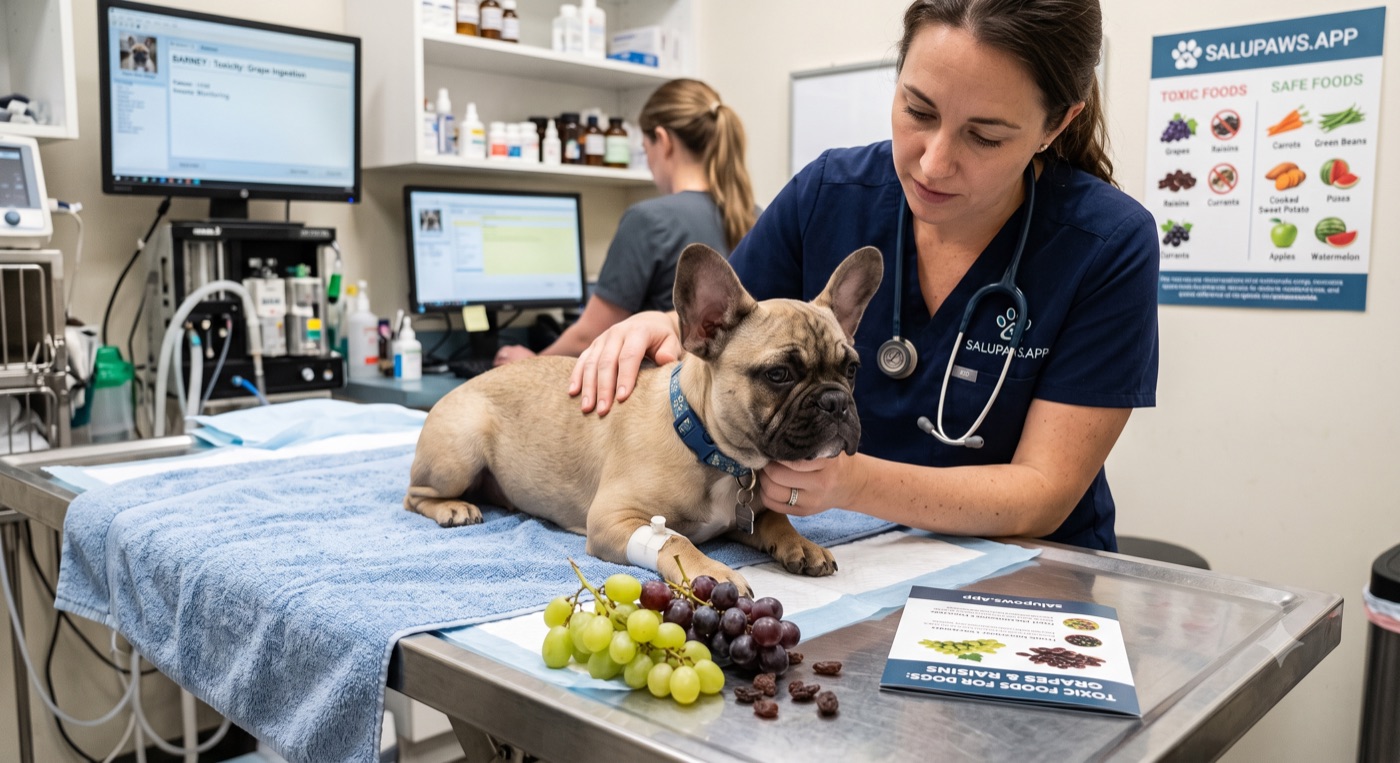
Because grape toxicity is unpredictable, vets treat every ingestion as an emergency - even a single grape.
Why grapes are so dangerous
Grape toxicity is idiosyncratic - it doesn't scale predictably with dose or dog size the way chocolate does. Research points to tartaric acid in grapes as the likely culprit, and levels vary between grape varieties, which may explain why reactions are so unpredictable. Because a vet can't tell you your dog will be one of the lucky ones, every ingestion is treated as an emergency.
All of these count:
- Fresh grapes - any colour, seeded or seedless
- Raisins, sultanas & currants - at least as dangerous, and concentrated in baked goods
- Fruit cake, hot cross buns, mince pies, malt loaf - festive baking is a classic cause of poisonings
- Grape juice and trail mix
Symptoms of grape poisoning
- First 6–24 hours: vomiting, diarrhoea, lethargy, loss of appetite
- 24–72 hours: signs of kidney injury - changes in thirst and urination, weakness, abdominal pain
Kidney damage can become irreversible. Early treatment - before symptoms appear - gives by far the best outcome.
My dog ate grapes or raisins - do this now
Call your vet or an animal poison line immediately (UK: Animal PoisonLine · US: ASPCA Animal Poison Control), even if your dog seems completely fine and even if it was "only one". Have ready: your dog's weight, what was eaten (fresh grapes, raisins, fruit cake), roughly how much, and when. Don't induce vomiting unless a professional tells you to.
How SaluPaws helps
SaluPaws checks every food you log against its toxic-food database - log "grapes" or "hot cross bun" and it warns you immediately, with vet guidance and a timestamped record on your dog's calendar for your vet. The check works offline, for every user, free.
Free on iPhone · Android coming soon
Grapes and dogs - FAQ
My dog ate one grape - is that really an emergency?
Treat it as one, especially for small dogs. Because sensitivity varies unpredictably between dogs, no vet can tell you in advance that one grape is safe for your dog. A quick phone call is always the right move.
How many grapes can kill a dog?
There's no reliable threshold - documented cases of kidney failure exist from small amounts. The safest accurate answer is: none is known to be safe, and quantity doesn't reliably predict the outcome.
Are peeled or seedless grapes safer?
No. Toxicity occurs with all varieties - seeded, seedless, peeled, red, green - and with dried forms (raisins, sultanas, currants), which are generally considered more dangerous weight-for-weight.
What will the vet do?
If ingestion was recent, typically induce vomiting and give activated charcoal, then often fluids and kidney-value monitoring over 48–72 hours. Acting before symptoms appear is what makes treatment effective.
Related foods
Sources: VCA Animal Hospitals - grape & raisin toxicity · MSD Veterinary Manual. This page is general guidance, not a substitute for professional veterinary advice. If your dog has eaten grapes or raisins, contact your vet immediately.